Connectivity You Own

Your phone number is a root credential. It unlocks your bank account, your email, your identity verification. It's the fallback when everything else fails. And right now, it lives in someone else's database.
You don't think twice about your phone bill. You pay, you get service. What you don't see is the side business your carrier runs on your data.
In 2024, America's four largest carriers were fined a combined $200 million for selling customer location data to third parties. AT&T alone sold access to at least 88 different entities. They appealed and called the fines excessive. AT&T still holds your location records for five years. T-Mobile keeps them for two. Both respond to law enforcement requests, often without notifying you.
SIM swapping is the other risk. Someone calls your carrier, convinces a rep they're you, and walks away with your phone number and everything it unlocks. The FBI recorded $48 million in losses from SIM swap attacks in 2023. The UK saw a 1,055% surge in cases in a single year. All it takes is the right rep on the wrong day.
Both problems trace back to one design choice: carriers hold your identity on your behalf. That's the root. Everything else is a symptom.
Custody is the problem
When you sign up with a carrier, you become a row in a database. Your name, your location history, your subscriber identity, all sitting in a centralized system managed by people you've never met under policies you didn't negotiate. You don't participate in those decisions. You experience their outcomes.
As long as someone else holds your identity, they can be compelled, convinced, or compromised into acting on it. This is how telecom was built. It doesn't have to stay that way.
What changes when you hold the key
Ubitel replaces the account model with a key model. Your identity lives on your device, protected by secure hardware that keeps your credentials isolated from everything else. You hold the key. Nobody can hand it over because nobody else has it.
You can't be SIM swapped. There's no customer service rep to social engineer, no central database to breach. The key never leaves your device.
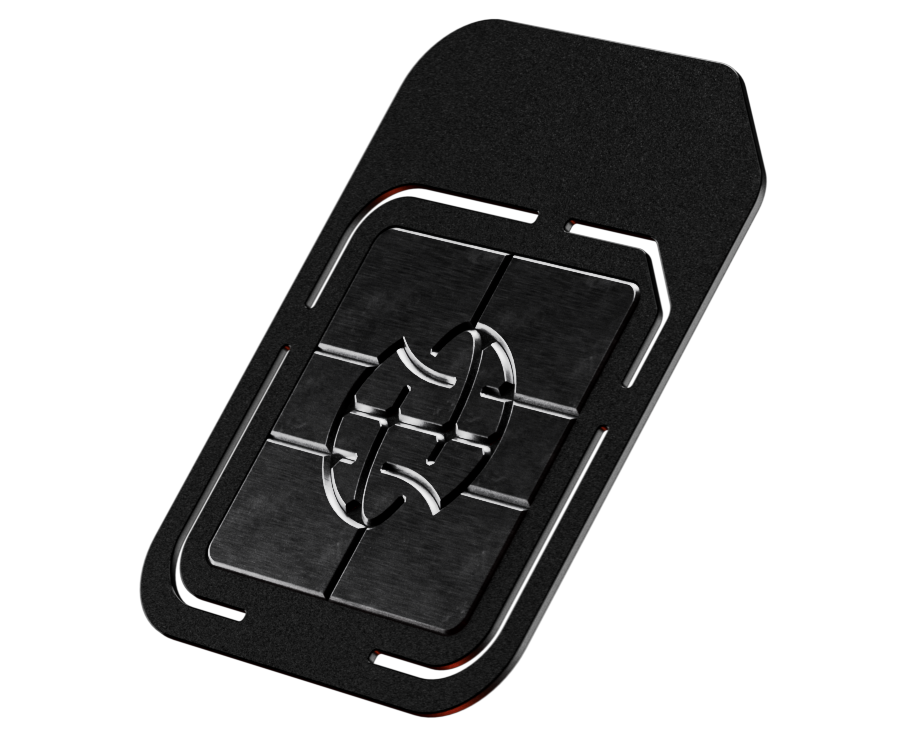
You get an eSIM, install it in seconds, and use it across 200+ countries with your subscriber identity under your control the whole time.
A two-sided network
Self-custody is the foundation. The network is the next layer.
We're building both sides of this. Users get private, portable connectivity across 200+ countries. Hosts contribute bandwidth and earn from real usage, with settlement onchain.
The eSIM marketplace is live at ubi.tel. The host network is coming. The order matters. We built the demand side first so that when hosts join, they're earning from traffic that already exists, not speculating on traffic that might.